
Cryogenic Plants
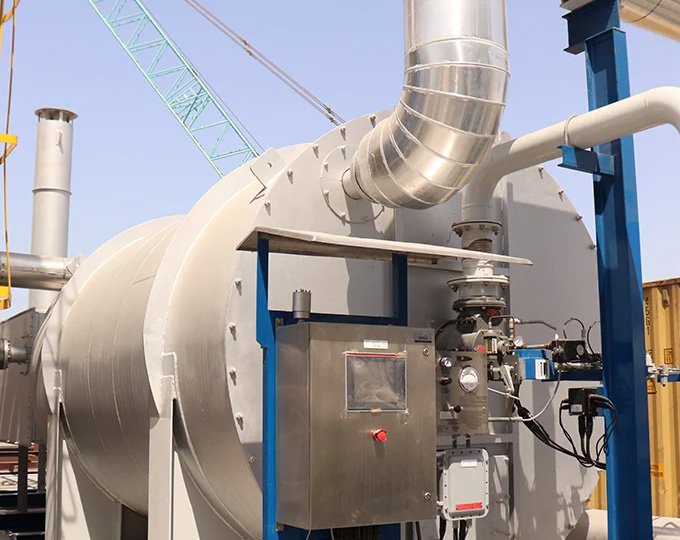
Cryogenic Plants
When higher recovery of ethane and propane is required than HCDPC packages can attain, cryogenic plants are required. In the gas industry, cryogenic temperature typically refers to temperatures below -45°C. SPEC provides the following methods for achieving cryogenic temperatures:
- Turbo Expanders
- J-T Valve Expansion
J-T Valve Expansion
This process is typically used for smaller gas flows. It is cheaper to install and operate than turbo expander units but will yield lower ethane recovery. This process uses the Joule-Thompson effect for achieving cryogenic temperatures. To achieve the cryogenic temperatures, a high differential pressure is required across the J-T valve along with sufficient heat exchange.
Process Description
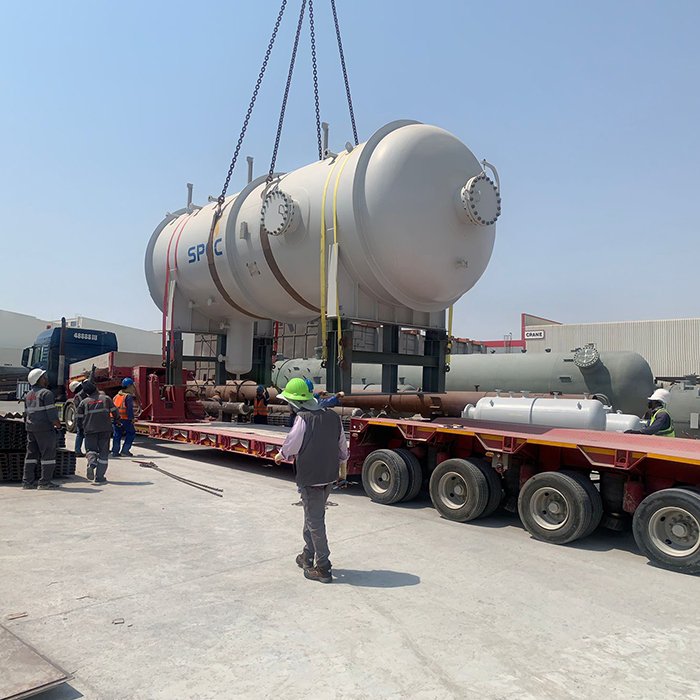
The dry gas is typically dried using molecular sieve units to achieve water concentrations below 1 ppm. The dry gas is first cooled with a heat exchanger before being expanded across a J-T valve. After the J-T valve, the liquid is sent to a cold separator where the liquid is sent to the de-methanizer tower while the overhead gas is used to cool the inlet feed gas in the heat exchanger. To increase efficiency and/or compensate for lower gas pressure, mechanical refrigeration can be added.
Advantages
- Modest ethane recovery
- Simple design and operation
- No rotating equipment required
Limitations
- High pressure required
- Cannot achieve ethane recoveries as high as Turbo Expanders
Major Equipments
- Molecular Sieve Dehydrators
- Gas/Gas heat exchanger
- J-T Valve
- Cold Separator
- De-methanizer Tower
- Reboilers
Turbo Expander Process
The use of turbo expanders is the predominate process for the recovery of ethane from gas. Turbo expanders use a turbine to expand the gas to cool the gas down to -101°C, sufficiently lower than a J-T valve alone.
Process Description
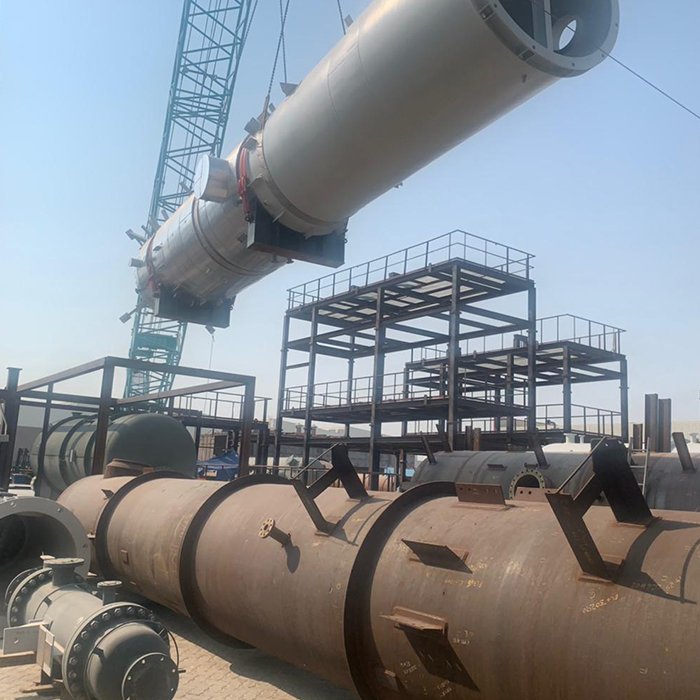
Molecular Sieves are used to dry the gas below 1 ppm prior to the turbo expansion process. Depending on the gas composition, a Gas/Gas exchanger is used for initial cooling of the incoming dry gas. If the gas has a richer composition, mechanical refrigeration may be required. The cooled gas is then sent to a cold separator. From the cold separator, a J-T Valve and Turbo expander work in parallel. The J-T Valve handles the bottoms and the top gas heads to the Turbo expander. Both Liquids are then sent to a De-methanizer tower for the removal of methane at the top and NGL at the bottom.
Major Equipments
- Gas/Gas Exchanger
- Cold Separator
- J-T Valve
- Turbo Expander
- De-methanizer Tower