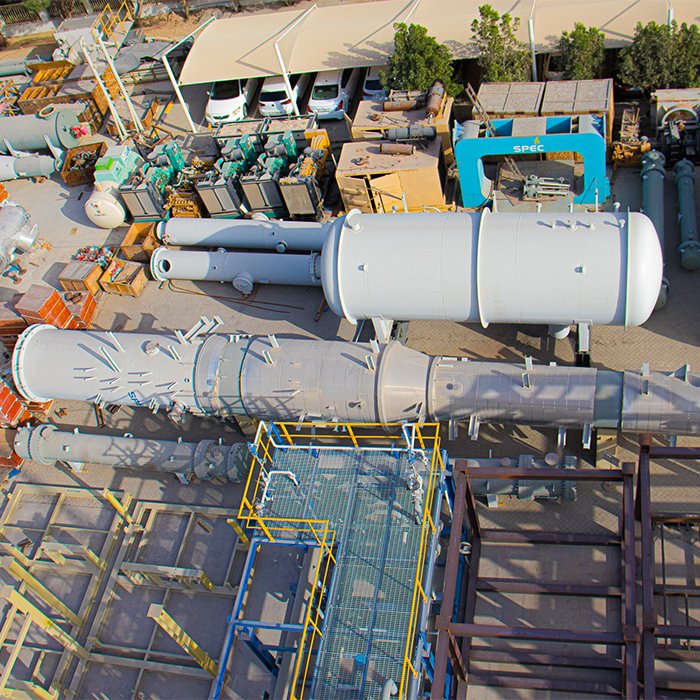
Glycol Dehydration

Dehydration of Natural Gas
When natural gas is extracted from a reservoir, it will typically contain water vapor. The water vapor concentration in the gas depend on the temperature, pressure and, conditions of the reservoir bed from which the gas is being extracted. The process of removing water from natural gas is known as dehydration.
The key factors for dehydrating natural gas are:
- Meet water concentration target of sales gas
- Prevent the formation of hydrates/condensation of water during processing and transportation
- Increased the heating value of the natural gas
- Corrosion prevention
Commonly used techniques for gas dehydration include the use of liquid and dry desiccants to achieve the required water concentrations of the gas stream. Except for cryogenic applications, The Glycol Dehydration process is the application of choice. Two types of glycol dehydration are commonly used in the Oil and Gas Industry: Ethylene Glycol (EG) and Triethylene Glycol (TEG). The basic operation of both systems are similar however the choosing which application better suites your process is subject to variable such as operating temperature.
TEG Process Description
Advantage of Glycol Dehydration
- Lower initial capital investment required
- Glycol Regeneration is easy and straight forward
- Glycol Dehydration is a continuous process
Limitations of Glycol Dehydration
- Cannot achieve dew point low enough for cryogenic applications
- Glycol can be easily contaminated and will become corrosive
Equipment Configuration
Absorber, Inlet Scrubber (typically integrated with Absorber), Flash Tank, Filters, Glycol Reboiler with Burner Management System, Surge Tank, Still Column, Glycol Pump, Heat Exchangers, Analog Pressure/Temperature indicators, Pneumatic Controllers, Pneumatic Control Valves
Optional Equipment List
Process Drain Tank, Spare Glycol Pumps, Sparging Tube for Glycol Reboiler\, Integrated Electro/Pneumatic system with PLC system